How we judge a batch before it earns the Sara Saffron name
The 5S Standard
Our saffron is checked against five physical measures of quality: the same ones our Great Taste judges and ISO 3632 lab testing look for. No single grade number tells the whole story. These five do.

Shade
Look closely and you'll see it before you smell anything: a deep, even brick-red running the full length of each thread, with no pale or yellow patches breaking it up.
That colour comes from crocin, a carotenoid pigment saffron produces in unusually high concentration, and it's exactly what an ISO 3632 lab test measures when it grades a batch. So looking closely at a thread is really doing the same test a lab does with a spectrophotometer, just with your eyes instead of a machine.
ISO 3632 Category I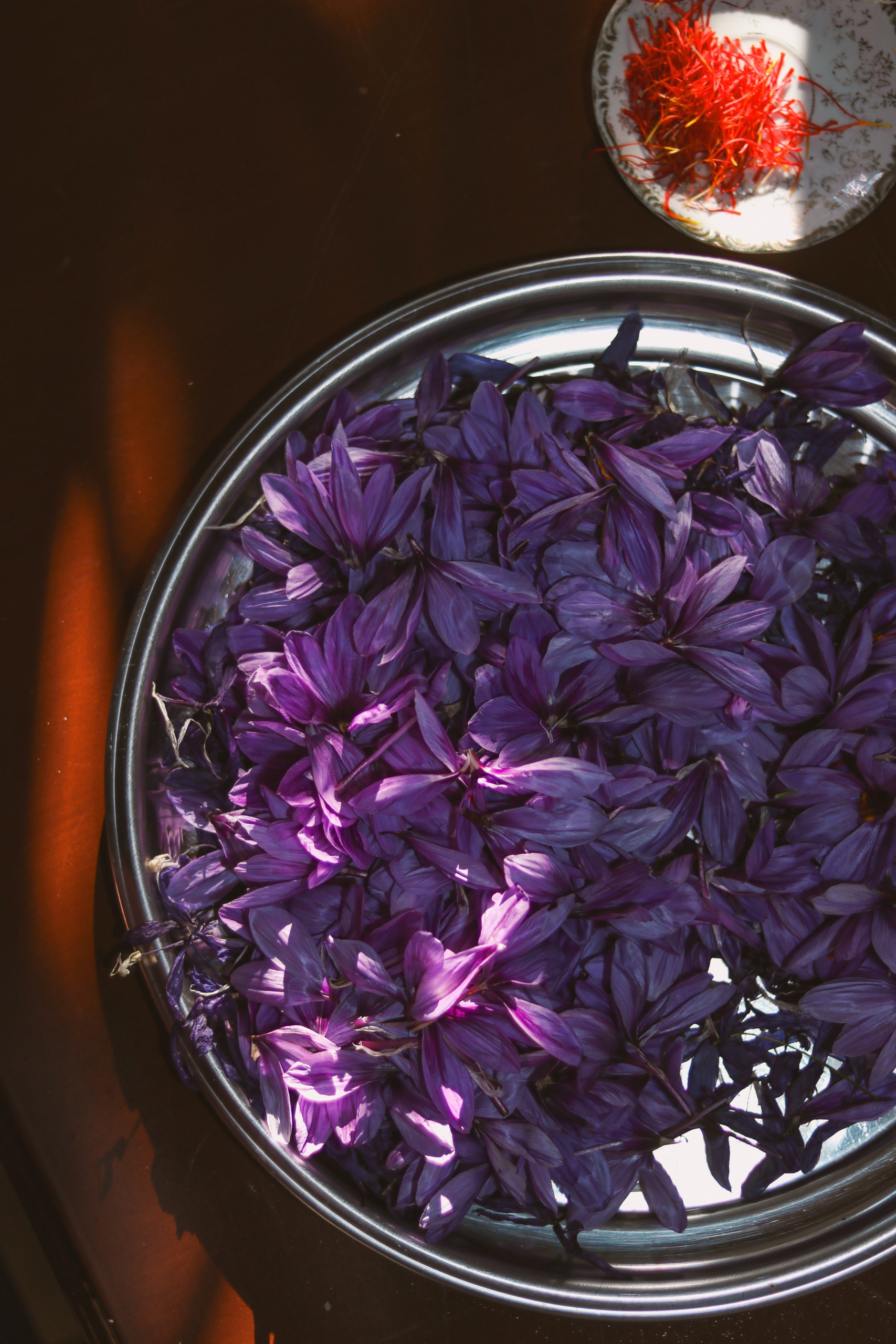
Scent
Fresh saffron carries honey, earthy, hay-like aroma that hits before the jar is even fully open. The compound behind it is safranal, a volatile oil that forms as the threads dry, and it fades steadily with age and poor storage.
Rub a thread between your fingers before you smell it and you'll notice the trick graders use: fresh saffron releases safranal almost instantly, while older stock needs real coaxing, and sometimes never quite gets there.
Judged alongside colour in every Great Taste tasting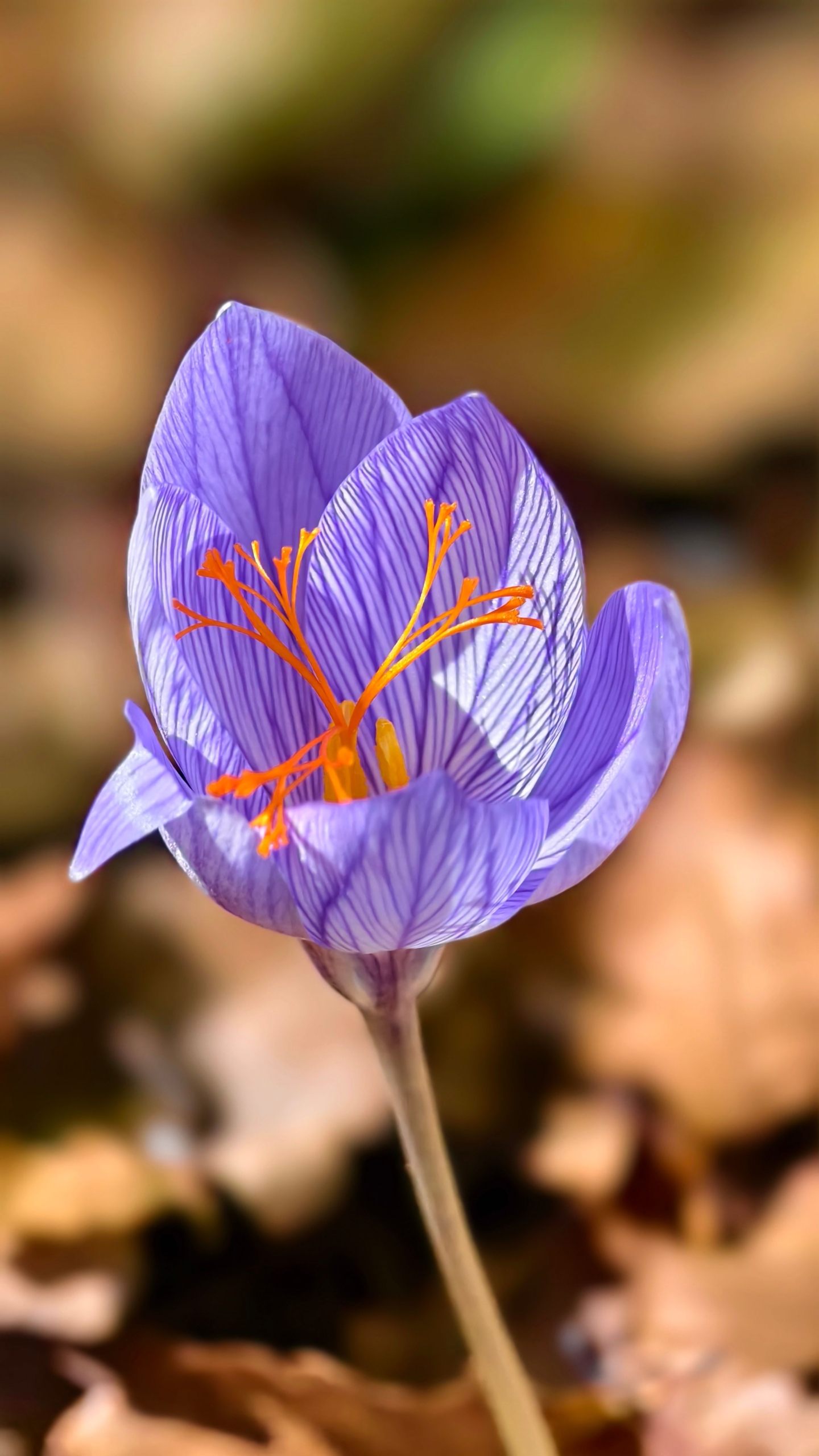
Structure
Whole, unbroken stigmas, not powder and not fragments, is what separates our Super Negin grade from lower cuts. Each stigma is the female part of the crocus flower, just three per bloom, hand picked and hand sorted so no yellow or white style tissue is left attached.
It's also a practical safeguard: powdered saffron is the easiest thing in the spice world to stretch with safflower, turmeric, or dyed corn silk, and a whole thread has nowhere to hide.
Super Negin Grade A+++, hand-sorted, whole threads only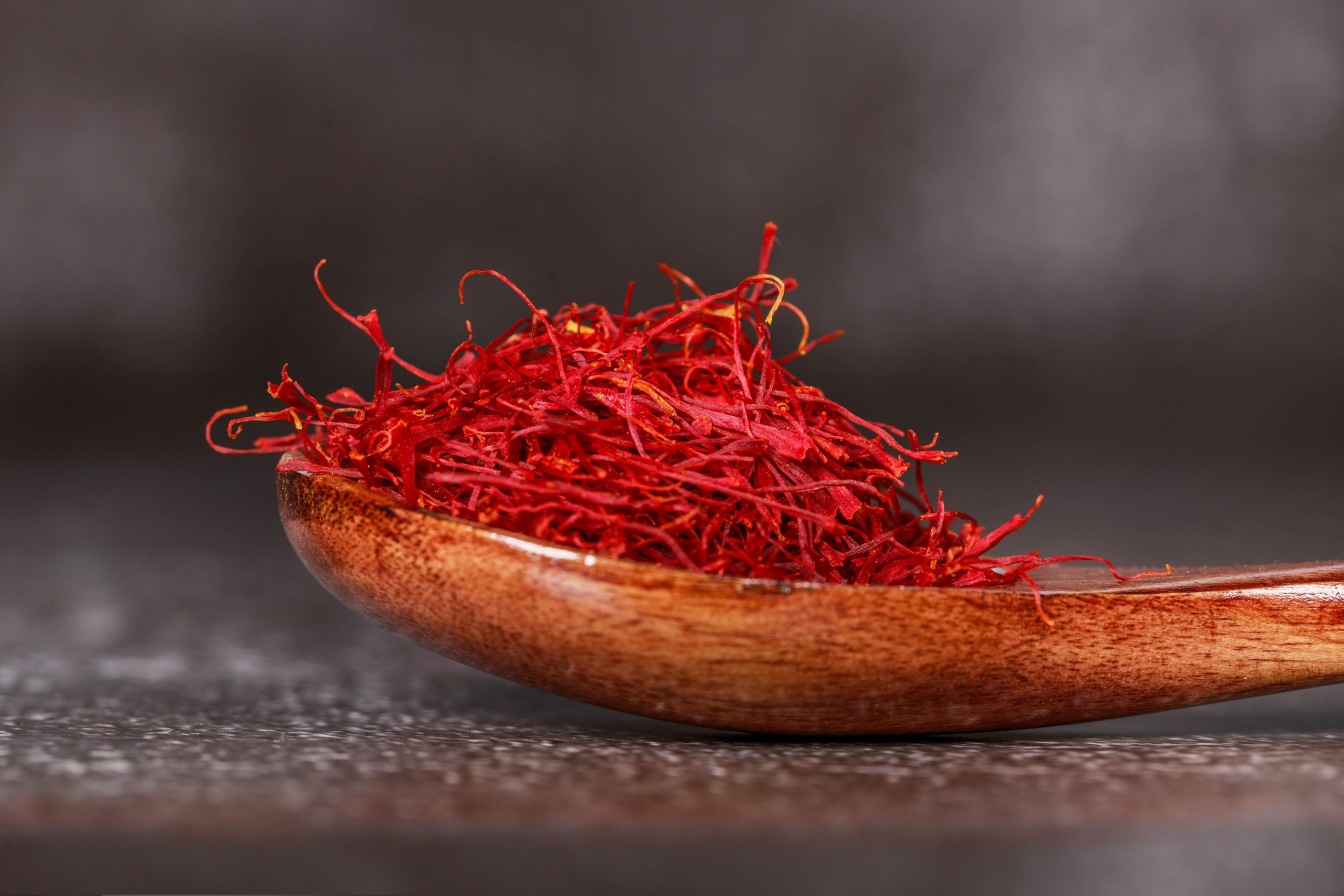
Solubility
Drop a few threads into warm water and watch: genuine, fresh saffron bleeds colour almost immediately, turning the water a deep, layered gold within seconds.
That's crocin again, doing what it does best. Unlike most plant pigments, it's genuinely water soluble, which is why saffron works its way through a broth, a rice pot, or a pan of warm milk rather than needing oil to carry it.
Adulterated saffron often bleeds a flat, artificial orange straight away, while the real thing builds colour gradually, in warm layers, the way a good stock does.
Try it yourself: the 30-second glass-of-water test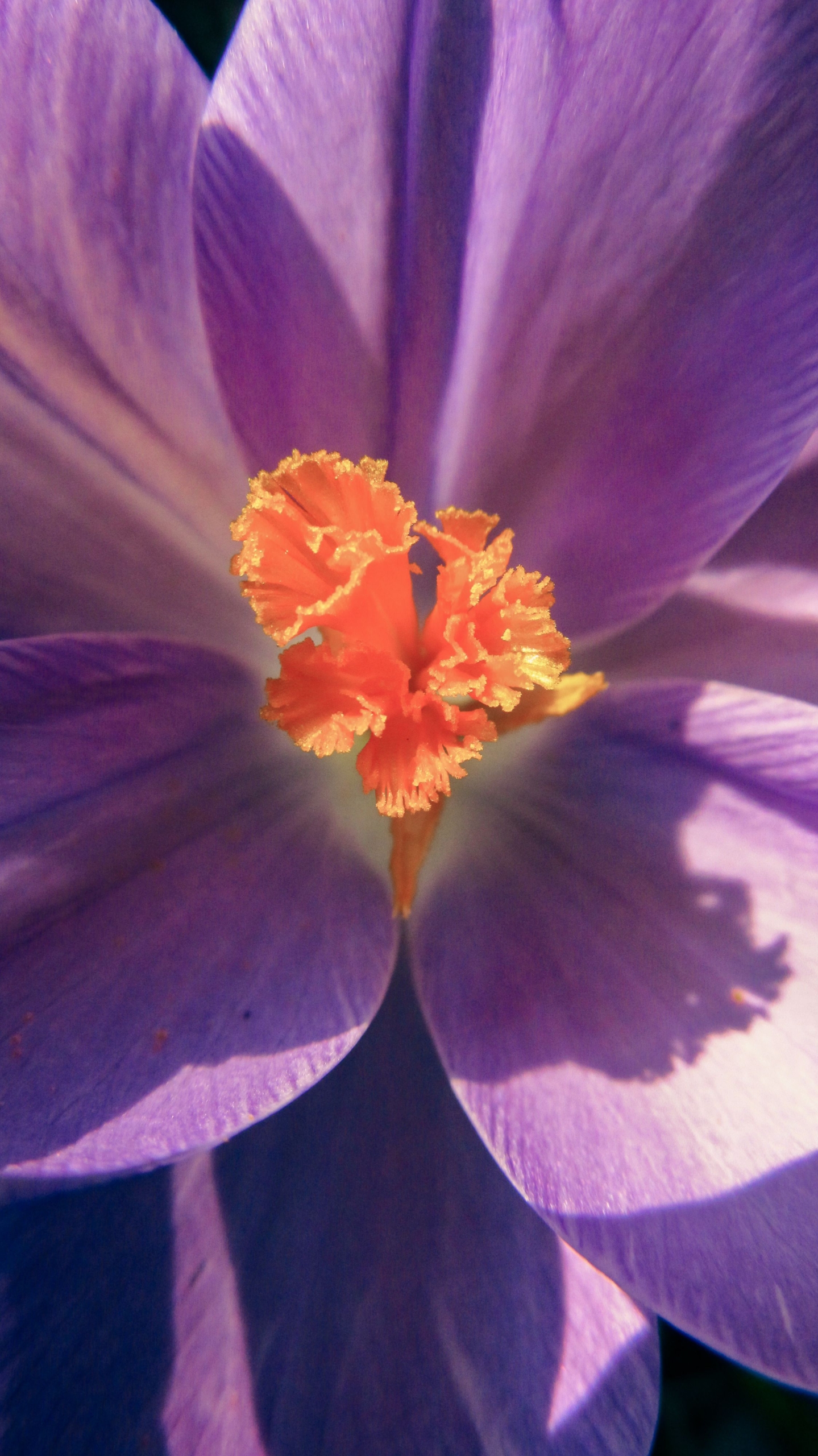
Source
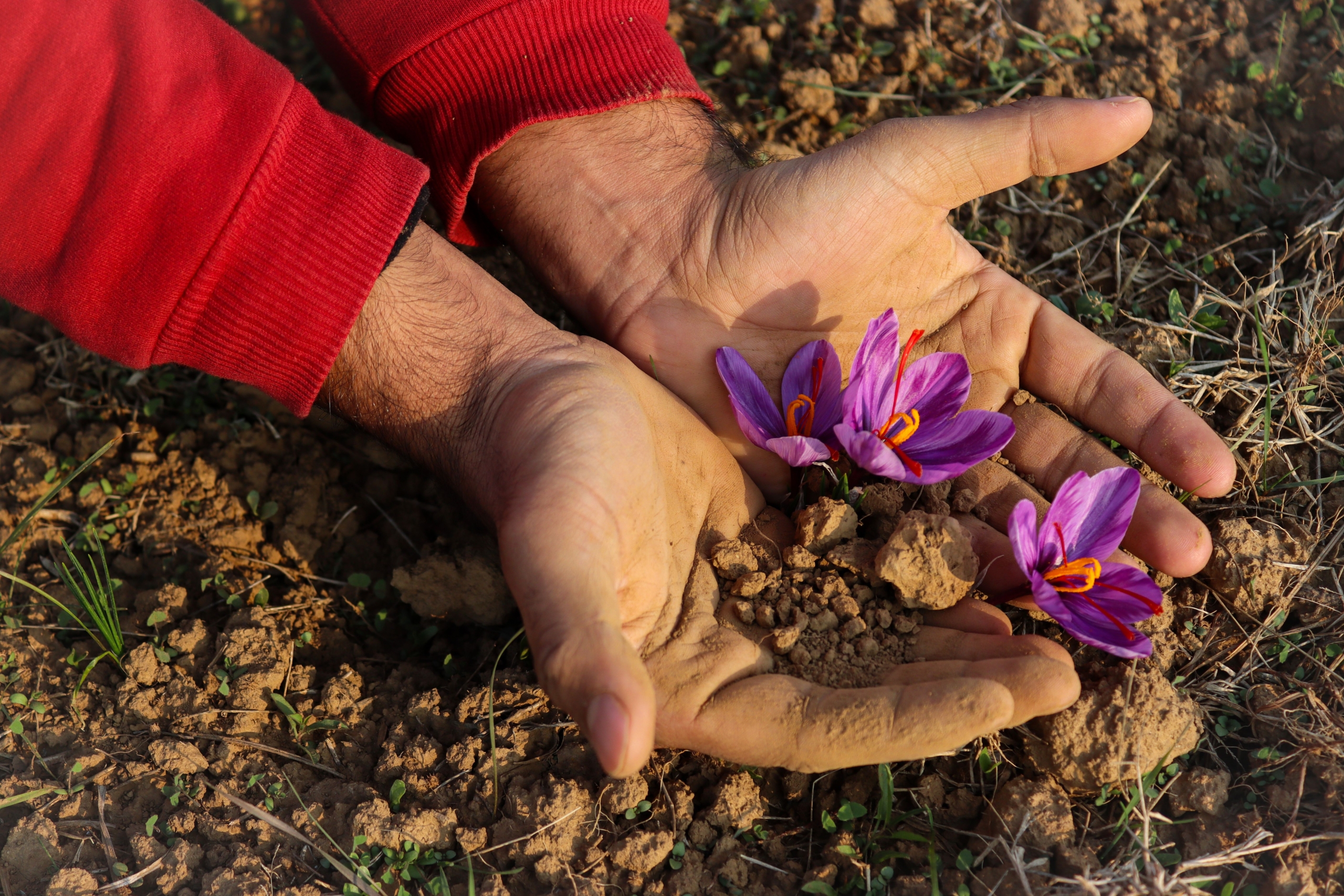
We work directly with generational growers who farm mineral-rich, semi-arid soils at high altitude, where extreme shifts between hot days and freezing nights create the ideal microclimate for saffron.
These families have harvested by hand for generations, picking before dawn at the precise moment blooms open to preserve delicate aromatic compounds before the morning sun touches them.
Soil vitality, elevation, and harvest timing directly dictate how much crocin, safranal, and picrocrocin each stigma develops. Because origin and craft are the easiest things to fake on a spice label, we bypass middlemen to partner straight with dedicated farms, ensuring every batch is fully traceable from field to jar.
Direct farm partnerships • Generational harvest craft